Driving in France
Mandatory & Recommended Items to Bring
Vehicles registered in the UK must display the letters 'UK' when driving in France.
Mandatory Items by Law
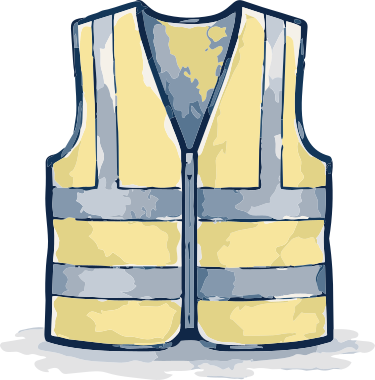
Reflective jackets
Must be carried for all occupants
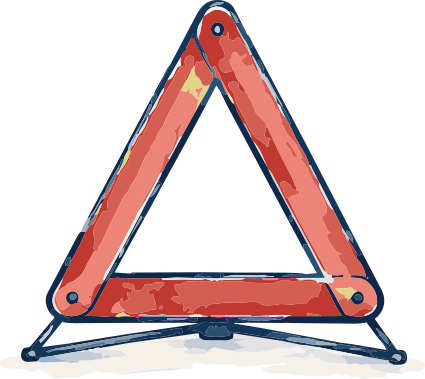
Warning triangle
To be placed behind vehicle in a breakdown
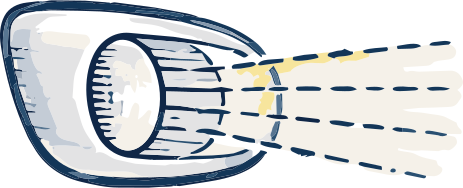
Headlamp beam deflectors
Required for right-hand drive vehicles
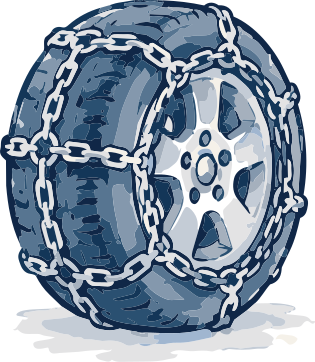
Snow chains
When driving through 'snow zones'
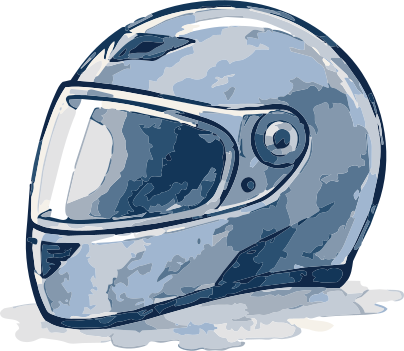
Safety helmets
For motorcyclists and their passengers
Clean Air Stickers
You need a Crit’Air sticker displayed on your car when travelling to certain cities.
It costs €4.91 and the sticker will be sent to you within 5-10 days.
Failure to display the correct Crit’Air sticker could incur an on-the-spot fine of €135.
Road Rules
Driving in France has some local rules that differ from those in the UK, which drivers should be aware of.
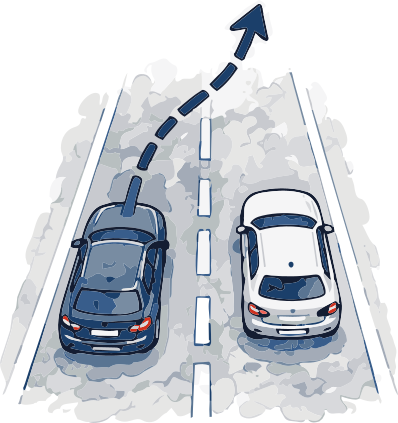
Overtaking
As a general rule, drive on the right; overtake on the left.
Where traffic is in lanes, vehicles may overtake on the right of other vehicles in slower-moving lanes.
On steep gradients, vehicles travelling downhill must give way to vehicles travelling uphill.
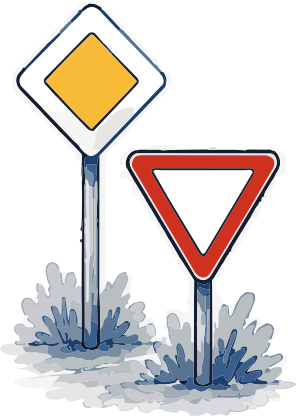
Who has priority?
At intersections, you must give way to vehicles approaching from your right, unless otherwise indicated.
Drivers approaching a roundabout must give way to traffic already on the roundabout.
You must also give way to emergency vehicles with flashing lights or sirens.
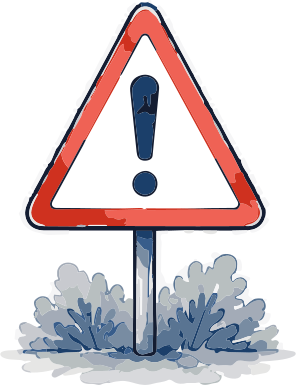
Warning of approach
Horns may only be used to give necessary warning to other road users.
Between sunset and sunrise, warning must be given by flashing passing lights.
The horn may be used only in cases of absolute necessity.
In all built-up areas, use of the horn is prohibited except in cases of immediate danger.
The use of multi-tone horns, sirens, and whistles is prohibited.
Seat Belt Law
Traffic Lights
The international three-colour traffic light system is used in France. However, there is no amber light after the red light.
A flashing amber light indicates caution, slow down, or proceed but give way to vehicles coming from the right.
A flashing red light indicates no entry. It may also indicate a level crossing or exit used by emergency vehicles.
If a red light is accompanied by a yellow arrow, you may proceed in the direction indicated by the arrow, provided you give way to vehicles travelling in that direction, as well as to pedestrians.
Parking
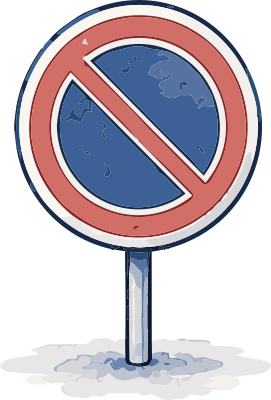
Regulations
- Two-lane roads: Park on the right-hand side only.
- One-way streets: Park on both sides if the road is wide enough.
- Continuous yellow line: Stopping and parking are prohibited.
- Broken yellow line: Parking is prohibited.
Enforcement
- Towing: Illegally parked cars can be impounded at the owner’s expense.
- Clamping: Used in Paris and large towns; releasing the vehicle requires paying police fines.
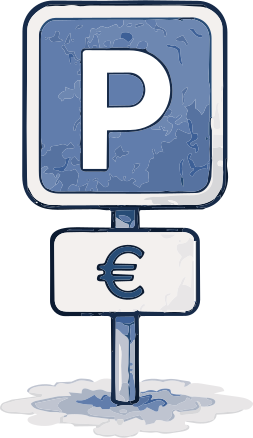
Paid Parking
- Zones: Marked by road signs requiring payment via meters or ticket machines.
- Payment: Machines accept cash, and some accept credit/debit cards.
- Continuous yellow line: Stopping and parking are prohibited.
- Broken yellow line: Parking is prohibited.
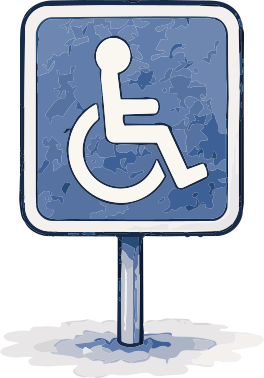
Disabled Parking
- Access: Badges allow use of reserved spaces, but do not automatically mean parking is free.
- Paris exception: Badge-holders can park for free in standard fee-paying zones.
- Time limits: Generally waived for disabled motorists in restricted, free parking zones.
Road Markings
Most road lines on the road are white, while a yellow zigzag line indicates a bus stop. If you find any blue lines or markings on the road, then parking is restricted.
Yellow lines on the edge of the roadway indicate that stopping and/or parking are prohibited.
Speed Limits
France uses the metric system for all road signs, meaning speed limits and other road signs, including distance, are indicated using kilometres and metres.
Speed limits are lowered in rain and other adverse weather conditions, while special speed restrictions apply to certain classes of vehicles, including coaches and cars with trailers, so check before travel.
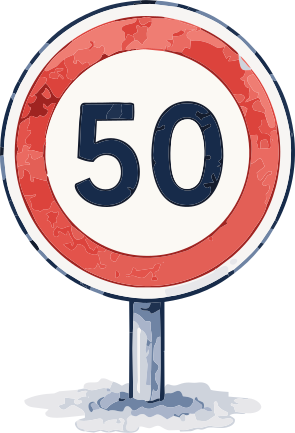
Built-up areas
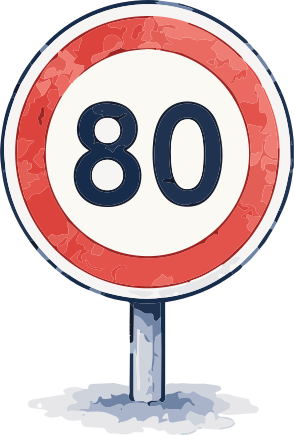
Single carriageways
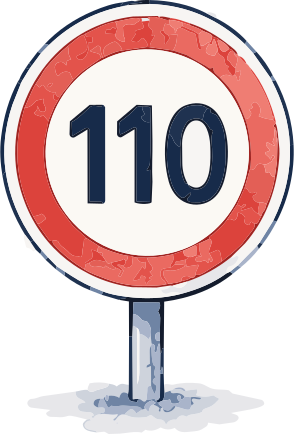
Dual carriageways
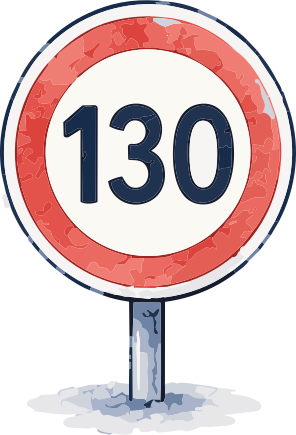
Motorways (dry)
Motorways (wet)